

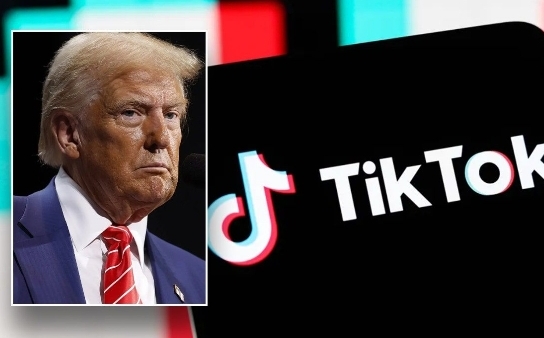
In a statement provided through an amicus brief on Friday, President-elect Donald Trump argued that the decision regarding whether TikTok should be allowed to continue its operations in the United States should rest in his hands. He emphasized that this matter involves complex and significant issues tied to both national security and the First Amendment. Trump’s assertion highlights his belief in the necessity of executive oversight in situations where technology platforms intersect with matters of national importance and constitutional rights.
Trump’s remarks reflect the ongoing debate about the role of foreign-owned technology companies in the United States, particularly those like TikTok, which has faced scrutiny over its Chinese parent company, ByteDance. Concerns have been raised about the potential risks these platforms may pose, including allegations of data collection practices that could allow foreign governments to access sensitive information about American users. Given these allegations, Trump’s administration previously sought to ban or force the sale of TikTok’s U.S. operations to an American company. The president-elect’s latest statement underscores his position that such decisions demand careful consideration of national security risks and constitutional freedoms, a balance he believes he is best positioned to strike.
The issue also raises significant First Amendment concerns, as TikTok serves as a platform for free expression and creative content. Millions of users in the United States rely on the app not only for entertainment but also for sharing their opinions, ideas, and perspectives. Any attempt to restrict or shut down TikTok could be seen as infringing upon users’ rights to free speech. In this context, Trump argues that decisions of this magnitude must account for the constitutional implications of limiting access to a platform that facilitates open communication.
Trump’s insistence on handling the matter personally stems from his administration’s broader efforts to regulate and scrutinize Chinese technology companies operating in the United States. The concern is not limited to TikTok alone but extends to other Chinese apps and platforms that might pose similar risks. However, TikTok has stood at the forefront of this debate due to its immense popularity and the significant amount of data it processes daily.
The president-elect’s argument also points to the need for a tailored response that considers the unique aspects of TikTok’s case. Unlike traditional national security threats, TikTok presents a hybrid challenge involving technology, geopolitics, and user rights. Trump contends that such challenges require leadership with the capacity to weigh the risks and benefits thoroughly, a task he believes falls under the purview of the executive branch.
Critics of Trump’s position argue that his approach may overreach executive authority and that such decisions should involve a broader coalition, including Congress and independent regulatory agencies. They assert that national security concerns should be addressed through transparent processes that also respect the rights of businesses and users. Supporters, on the other hand, applaud Trump’s assertiveness in taking a stand against foreign influence and protecting American interests.
In summary, President-elect Donald Trump’s statement in the amicus brief highlights his belief that he should be the one to decide TikTok’s fate in the United States. He frames the issue as a unique challenge involving national security concerns and First Amendment rights, requiring careful deliberation and decisive leadership. The case continues to spark debate about the appropriate balance between ensuring national security, protecting constitutional freedoms, and fostering an open digital economy. As this issue unfolds, it remains to be seen how the balance between these competing priorities will be achieved.
“Trump Calls for Executive Authority in TikTok Decision Amid National Security and Free Speech Concerns”


Recent Comments
on Hello world!