

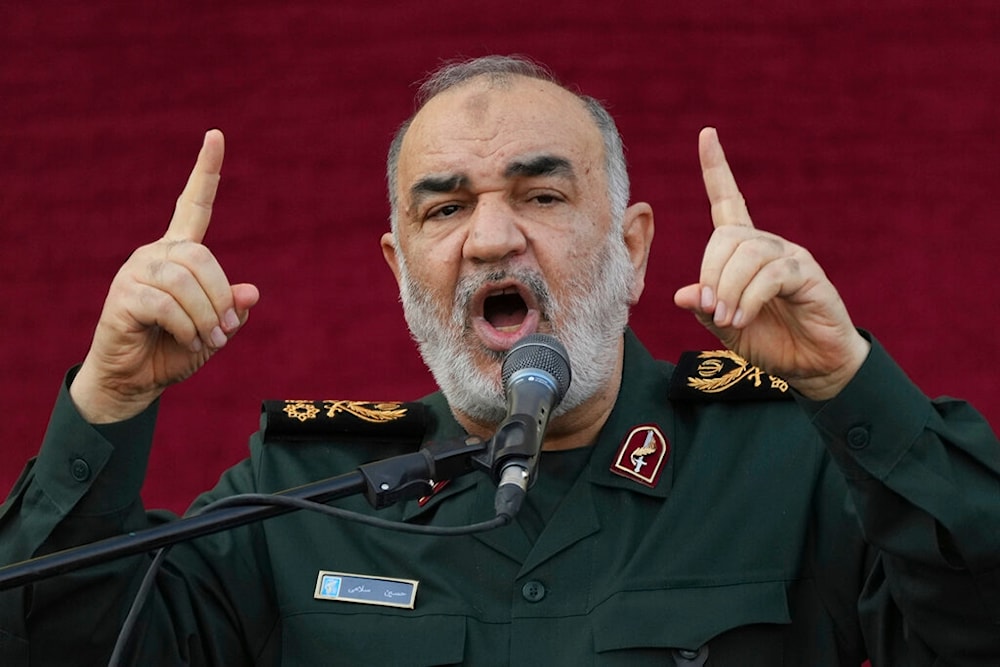
The recent pronouncement by Major General Hossein Salami, the commander of Iran’s Revolutionary Guard Corps (IRGC), marks a significant escalation in the already fraught relationship between Iran and Israel. Following an Israeli air attack on Iranian military installations early Saturday, which reportedly resulted in the deaths of four Iranian soldiers, Salami issued a stern warning, declaring that Israel would face “bitter consequences” for its actions.
In his statements to Iranian media, Salami asserted that the attack represented a failure on Israel’s part, reflecting “miscalculation and helplessness.” This characterization suggests that not only did the strike fail to achieve its intended objectives, but it also underscores a perceived weakness within the Israeli military strategy. Salami’s rhetoric implies that such aggressive moves are counterproductive and could provoke significant retaliation.
In tandem with Salami’s warnings, a spokesperson for Iran’s foreign ministry reiterated the country’s commitment to responding decisively to any acts of aggression. He emphasized that Tehran would utilize all available means to counter the threats posed by Israel, which signals a readiness to escalate military responses if necessary. This statement reinforces Iran’s commitment to defending its national sovereignty and military assets against perceived external threats.
The backdrop of this exchange is a complex and volatile geopolitical landscape in the Middle East, characterized by deep-rooted animosities and a history of military confrontations between Iran and Israel. The current tensions highlight the precarious nature of regional security and the potential for conflict escalation. With both nations exhibiting a strong willingness to engage in military posturing, there is growing concern that further provocations could lead to a broader and more destabilizing conflict in the region, with implications that could extend beyond their borders.
Iran Threatens Israel with Retaliation After Airstrike on Military Sites


Recent Comments
on Hello world!