

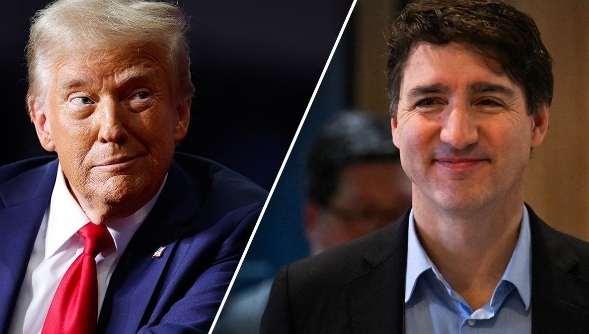
On Friday, President-elect Donald Trump reported having had a “very productive meeting” with Canadian Prime Minister Justin Trudeau at Trump’s Mar-a-Lago estate in West Palm Beach, Florida. This significant gathering, held at one of Trump’s properties, marked an important moment in the early stages of his presidential transition, as he began engaging with world leaders to discuss bilateral relations and global concerns. The meeting between Trump and Trudeau was highly anticipated, given the two leaders’ differing political backgrounds and the potential for key discussions regarding trade, international relations, and other important issues between the United States and Canada.
Trump described the meeting as “very productive,” signaling that meaningful progress was made in their discussions, although the specifics of what was discussed remained largely private. Both Trump and Trudeau are figures who have been central to their respective nations’ political spheres, and their meeting was seen as a way to set the tone for U.S.-Canada relations in the coming years. The two leaders, while representing different political ideologies, seemed to share mutual respect, and the encounter served as an opportunity to explore areas of cooperation, particularly in light of the ongoing shifts in international diplomacy.
Throughout the meeting, Trump and Trudeau were expected to have focused on several key topics, including trade agreements, security, and other shared interests between the two North American neighbors. One of the major topics likely discussed was the future of the North American Free Trade Agreement (NAFTA), a deal that Trump had campaigned on renegotiating during the 2016 presidential election. Since taking office, Trump has repeatedly expressed his dissatisfaction with the deal, calling it unfair to American workers. Trudeau, on the other hand, has supported NAFTA and emphasized the importance of maintaining strong trade relations between Canada and the United States. The two leaders’ differing views on NAFTA provided an opportunity for them to discuss potential compromises or modifications to the agreement in a way that could benefit both nations.
The Mar-a-Lago meeting also highlighted the importance of personal diplomacy between world leaders. For both Trump and Trudeau, forging a personal connection was likely seen as a critical step in building a working relationship that would allow for productive discussions on a range of global issues. Personal interactions between heads of state can often help to facilitate smoother communication, reduce tensions, and create the foundation for future cooperation on diplomatic matters. In this case, Trump and Trudeau were presented with the chance to establish rapport and lay the groundwork for their future interactions on the world stage.
In addition to trade, the two leaders may have addressed other regional concerns, such as security issues, environmental policies, and the shared commitment to combating terrorism. While the details of these discussions remain unclear, the fact that Trump and Trudeau were meeting at such an early stage of Trump’s transition suggests that both leaders recognized the importance of maintaining close ties between their countries. The U.S. and Canada have long had a strong and mutually beneficial relationship, and the meeting underscored their intent to preserve this connection despite potential policy shifts under Trump’s leadership.
As the meeting concluded, Trump and Trudeau both emphasized the importance of their discussions, signaling a desire to maintain open lines of communication as they move forward in their respective political careers. While the meeting may have been just one of many diplomatic engagements for Trump as he prepared to take office, it served as an early indication of how he might approach foreign relations in the future. For Canada, the meeting with Trump represented a chance to engage with the incoming administration and ensure that Canadian interests would be represented on the global stage. In turn, the United States also stood to benefit from a strong, ongoing relationship with Canada, especially in light of the interconnectedness of their economies and security concerns.
In the broader context of Trump’s early diplomatic efforts, the meeting with Trudeau highlighted the significance of establishing strong international relationships right from the start of his presidency. With global challenges on the horizon, fostering collaboration with key allies like Canada would be vital to advancing the interests of both nations, setting the stage for a new era of cooperation between the U.S. and Canada.
“Trump and Trudeau Hold ‘Very Productive’ Meeting at Mar-a-Lago to Discuss U.S.-Canada Relations”


Recent Comments
on Hello world!